

The 5 Phases of Successful Project Management
Sep 2, 2025 | By Patrick Ng
There is a science to what they do. They have a deep understanding of the job and can perfectly execute the five phases of project management.
No matter what project you are preparing for, the project management life cycle can assist you and your team in narrowing the project’s focus, keeping its objectives in order, and finishing the project on time, on budget, and with a minimum of headaches.
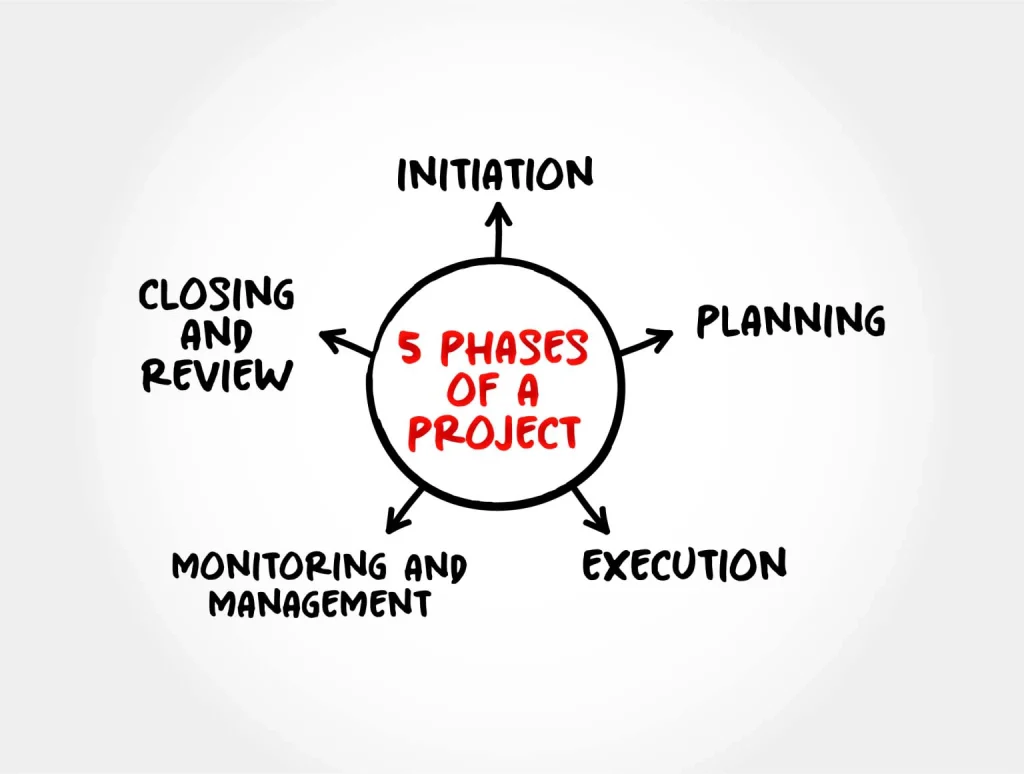
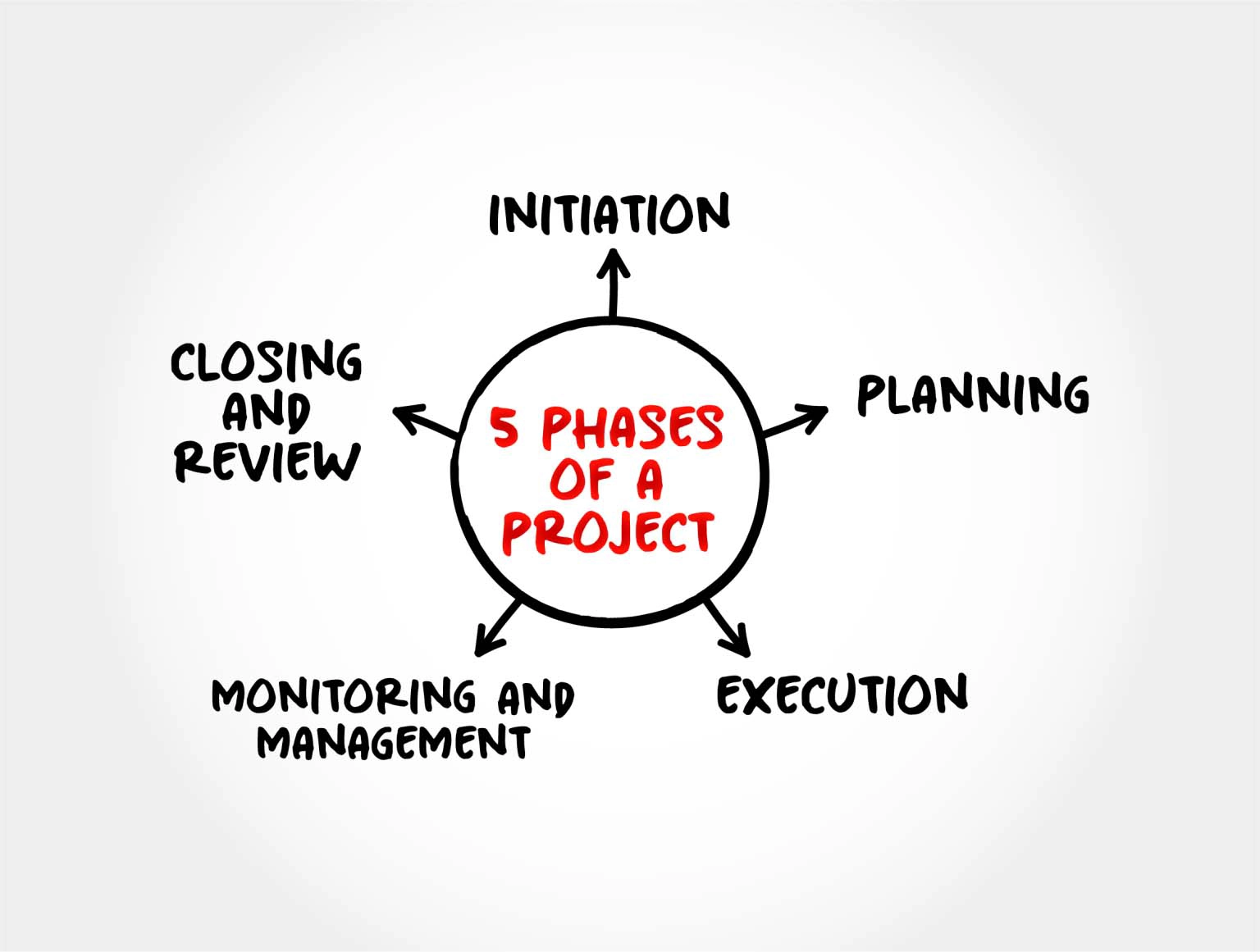
Every project management life cycle contains five steps:
-
Define goals/specification – Initiation
-
Plan the project – Planning
-
Execute the project – Execution
-
Manage the project – Monitoring
-
Finish the project – Control and Closure
No one step is more important than the other, and each step plays a crucial role in getting your project off the ground, through the race, down the stretch, and across the finish line.
Project Management Lifecycle Overview
Project Initiation
The first step provides an overview of the project in addition to the strategy you adopt to achieve the desired results.
During the initiation phase, you will appoint a project manager who, in turn, based on his or her experience and skills, will select the required team members. This is where the project’s value and feasibility are measured.
Project managers typically use two evaluation tools to decide whether or not to pursue a project:
-
Business Case Document – This document justifies the need for the project and includes an estimate of potential financial benefits.
-
Feasibility Study – This is an evaluation of the project’s goals, timeline, and costs to determine if the project should be executed. It balances the requirements of the project with available resources to see if pursuing the project makes sense.
Teams abandon proposed projects that are labelled unprofitable and/or unfeasible. However, projects that pass these two tests can be assigned to a project team or designated project office.
Key activities and processes you should perform during project initiation include:
-
Clearly define your project goals and document them.
-
Define the preliminary project scope.
-
Identify and appoint a project manager.
-
Identify the project’s stakeholders.
-
Prepare a project brief or a project concept note.
Plan the Project
Once the project receives the green light, it needs a solid plan to guide the team, as well as keep them on time and on budget.
A well-written project plan gives guidance for obtaining the required resources, acquiring financing, and procuring required materials. The project plan gives the team direction for producing quality outputs, handling risk, creating acceptance, communicating benefits to stakeholders, and managing suppliers.
The project plan also prepares teams for the obstacles they might encounter over the course of the project, and helps them understand the cost, scope, and timeframe of the project.
The planning phase will also include a risk assessment in addition to defining the criteria needed for the successful completion of each task. In short, the working processes are defined, stakeholders are identified, and reporting frequency and channels are explained.
Key activities and processes you should perform during project planning include:
-
Define a detailed scope of work.
-
Define the resources needed to complete each of the tasks identified in the project.
-
Define the project cost once the scope, resources, and timing are defined.
-
Plan how to coordinate with stakeholders and keep them informed and engaged throughout the project.
Project Execution
This is the phase that is most commonly associated with project management. Execution is all about building deliverables that satisfy the customer.
Team leaders make this happen by allocating resources and keeping team members focused on their assigned tasks. Execution relies heavily on the planning phase. The work and efforts of the team during the execution phase are derived from the project plan.
Key activities and processes you should perform during project execution include:
-
Conduct all the procurement required for the project.
-
Hire, develop, and manage all the human resources needed for the project.
-
Direct and manage project work.
-
Manage communications with the team, stakeholders, and client.
-
Manage any setbacks that may arise during the project.
Project Monitoring and Control
As teams execute their project plan, they must constantly monitor their own progress.
To guarantee delivery of what was promised, teams must monitor tasks to prevent scope creep, calculate key performance indicators, and track variations from allotted cost and time. This constant vigilance helps keep the project moving ahead smoothly.
Key activities and processes you should perform during monitoring and controlling include:
-
Monitor and control all activities to ensure they are being performed on time and on budget, as established in the project planning phase.
-
Monitor and control the quality of all activities being performed and the deliverables.
-
Validate deliverables according to the established criteria in the project planning phase.
-
Monitor the project team. Make sure that every team member is working on the assigned tasks, and that everybody is performing as expected.
Project Closure
Teams close a project when they deliver the finished project to the customer, communicate completion to stakeholders, and release resources to other projects.
This vital step in the project lifecycle allows the team to evaluate and document the project and move on to the next one, using previous project mistakes and successes to build stronger processes and more successful teams.
Although project management may seem overwhelming at times, breaking it down into these five distinct cycles can help your team manage even the most complex projects and use time and resources more wisely.
Key activities and processes you should perform during project closing include:
-
Close contracts with suppliers, external vendors, and consultants, and evaluate their performance.
-
Conduct a post-project review meeting and evaluation.
-
Archive all documentation that was developed during the project in a place that is easily accessible. It may be needed in the future.
-
Produce the final project report.